
On the Sunday of every week this year I find something that interests me enough to record it in a cellphone photograph. This week I wrote:
We begin this week in the industrial maritime corners of Seattle. We find ourselves attracted to the evident mastery of mechanical skills.
Traveling by bicycle my colleague Jeff Miller and I found our way to the Ballard Locks where we wiggled our bicycles across the top of the lock gates to get a better view of the ocean level boats soon to be elevated to the water level maintained in the Puget Sound.
I step over to the lockmaster's hut and peered in at the amazingly physical levers that opened and closed the gates on the seaward site of the lock. The operator paused as I struggled to block reflections from the glass that separated us. He asks, are you ready? Um, I get he can see me as well as I can see him. Yes, I said. Then with a coordinated motion he sequences the two levers for reasons that escape me. The gates close and the boats within start rising.
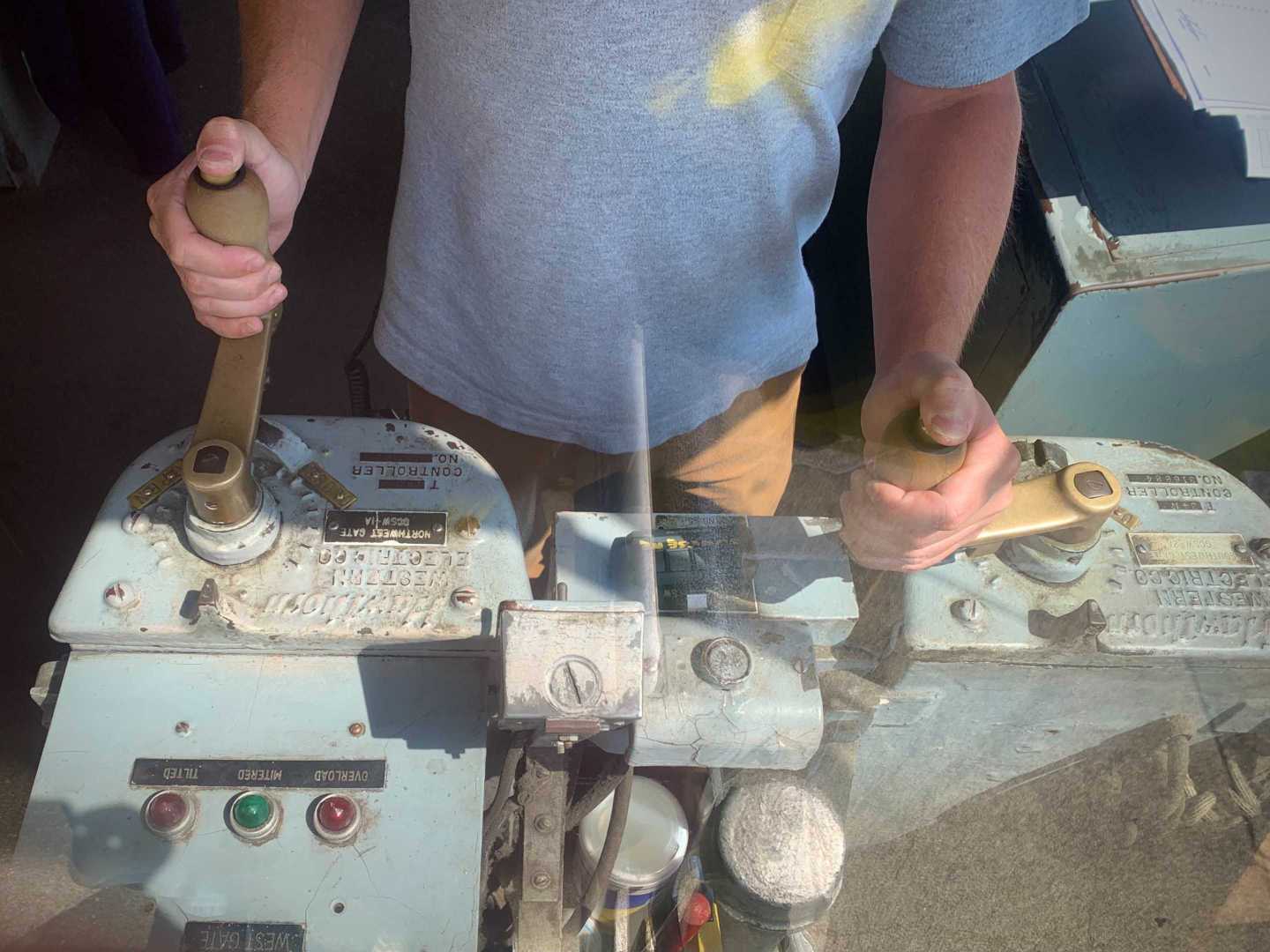
locks gate control
I am interested in how this operator comes to understand what he must do and especially how he responds when things don't go well.
There is a museum associated with the locks where there is a simulator that any guest can try their hand at operating the locks themselves. This is by necessity a simplification with pushbuttons replacing the levers I had seen operated with some finesse. site 
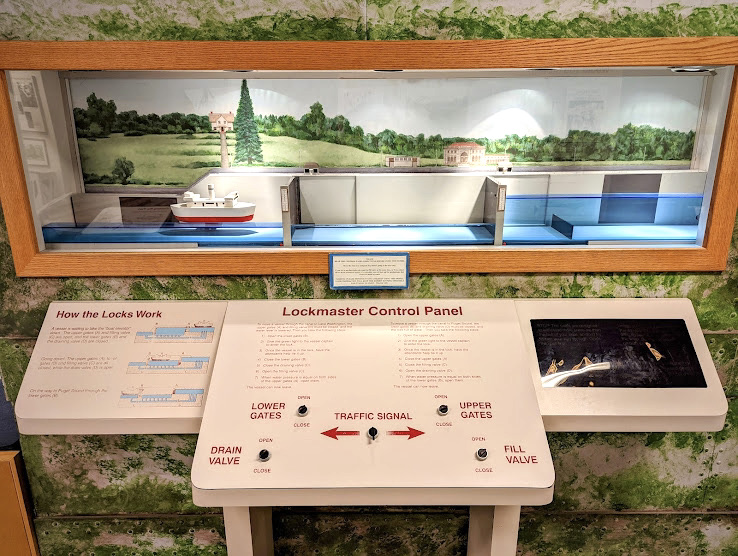
Lockmater Control Panel Simulation
Adam Solove suggested a museum of control panels in a tweet March 8, 2014. See Founding Tweet
I was intrigued with the idea of studying the strengths and weakness of control systems that predate the graphical user interface. These are worthy of study with both good and bad examples.
- How a Cockpit Remembers Its Speeds. Edwin Hutchins. pdf
- The Alarm problem and directed attention in dynamic fault management. David Woods. pdf
My attraction to Solove's idea was that with modern user interface technology and some notable successes with user-generated content, one could step into simulations that were significantly rich to appreciate the human performance required to keep systems working.
I revisit this now from the perspective of emerging augmented reality as it might supplement realistic models well beyond the push-button simulation of the fluid elevator above.
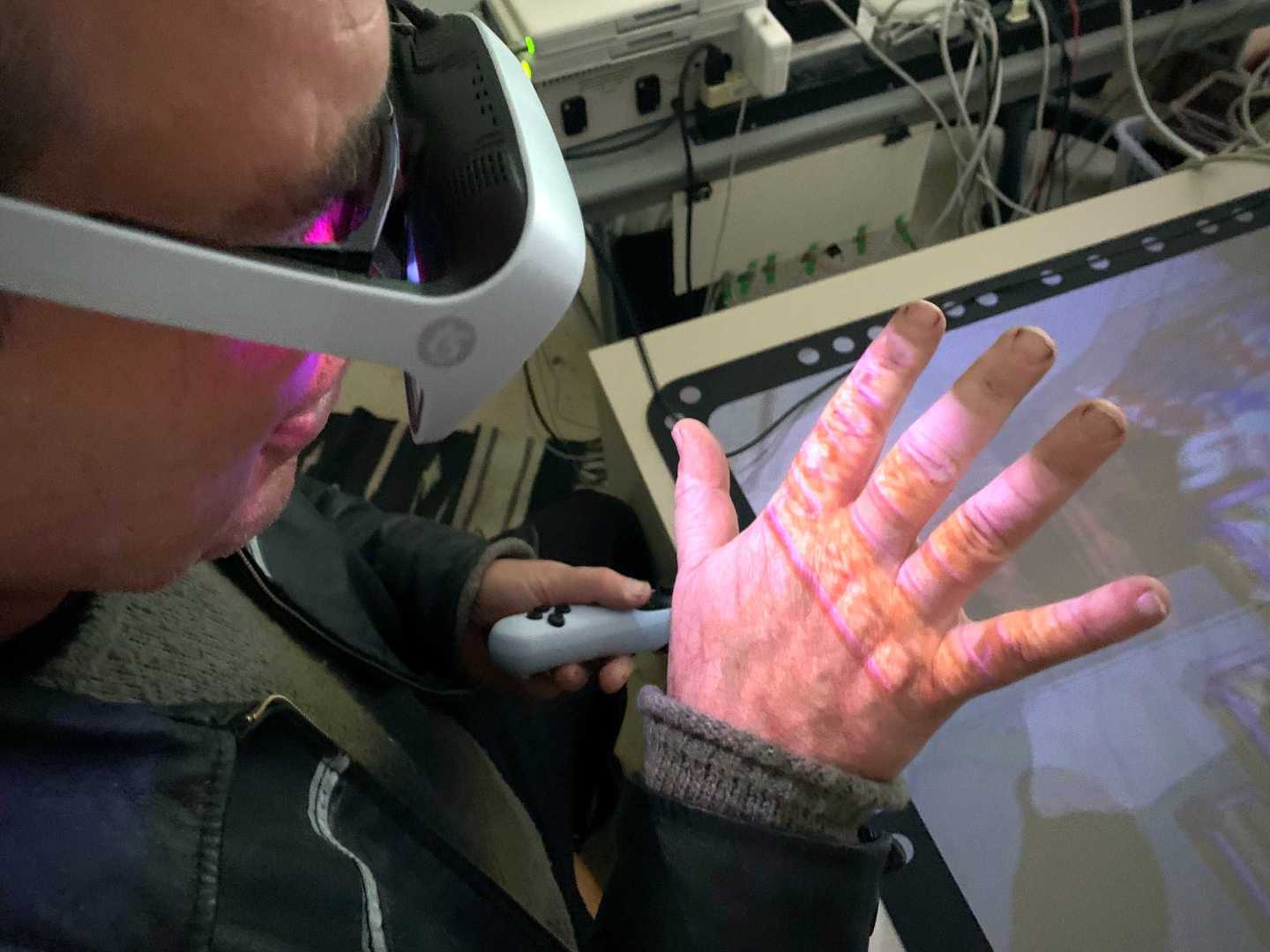
TiltFive retro-reflective augmented reality glasses confine the table-top where "holographic" images enter into a social situation.
We find stigmergic linking in hyper-text superior to traveling from room to room as one often envisions in virtual reality. Once one has chosen an operator's station the physical realities of legacy controls become relevant to the experience.
A panel that holds still and remains subject to joint investigation enables reasoned discussion of decision making processes and the skills required to make decisions in real time.